
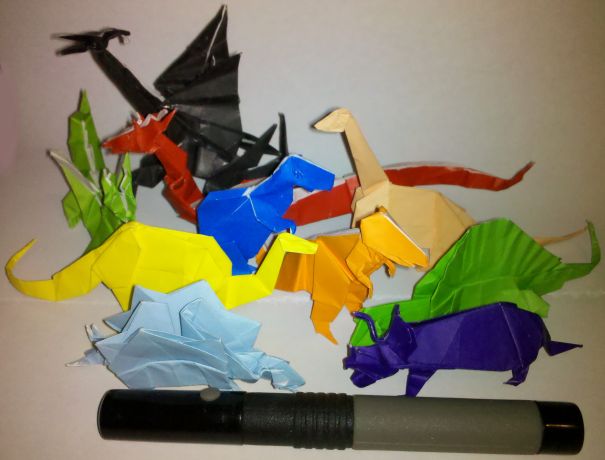
There’s a new poll to the right. Basically, “Should Makerbot hire MakerBlock to blog for them?” So, take 5 seconds and cast your vote. Then, on to pictures of dinosaurs with lasers!!!
Sometimes I just feel compelled to share nonsense, random thoughts, and sometimes just stuff I want to save
There’s a new poll to the right. Basically, “Should Makerbot hire MakerBlock to blog for them?” So, take 5 seconds and cast your vote. Then, on to pictures of dinosaurs with lasers!!!
The guys at MakerBot just posted a job opening for a MakerBot blogger. As if their list of qualifications wasn’t daunting enough, the tweet that follows… Well, I’ll just let it speak for itself.
MakerBot Blogger Wanted: http://bit.ly/dur4vK (also: dinosaurs with lasers wanted)
You want a robot obsessed dinosaur with lasers? 1 What kind of a job posting is that?
Dear lovely wife,
I never meant for this to happen. It just sort of happened. It all started so innocently – reading about the RepRap project, going to the MakerFaire, buying a MakerBot, starting this blog, extra plastic here and there… and then MakerBot advertised for a blogger.
Tell the kids I love them, don’t forget to feed the dog, and there’s a post-it on the dresser for my boss.1
If you need to reach me, I’ll be camped out 87 3rd Ave, Brooklyn, NY 11217 until they let me in and hire me.
Love,
MakerBlock
This morning I received an e-mail from Bre out of the blue introducing me to Travis Goodspeed. Apparently Travis has been working on building sonic screwdriver guts out of the GoodFET, a universal JTAG programmer, a “sonic screwdriver of hacking.” Travis suggested a GoodFET could be programmed to act as a TV-B-Gone, light show, or any number of other things. Given that his circuit board is about 3″ x 0.85″ x 0.2″1 , there shouldn’t be a problem finding space for it in the sonic screwdriver I’m in the middle of designing. 2
Freaking sweet.
So, here’s my real life sonic screwdriver wishlist:
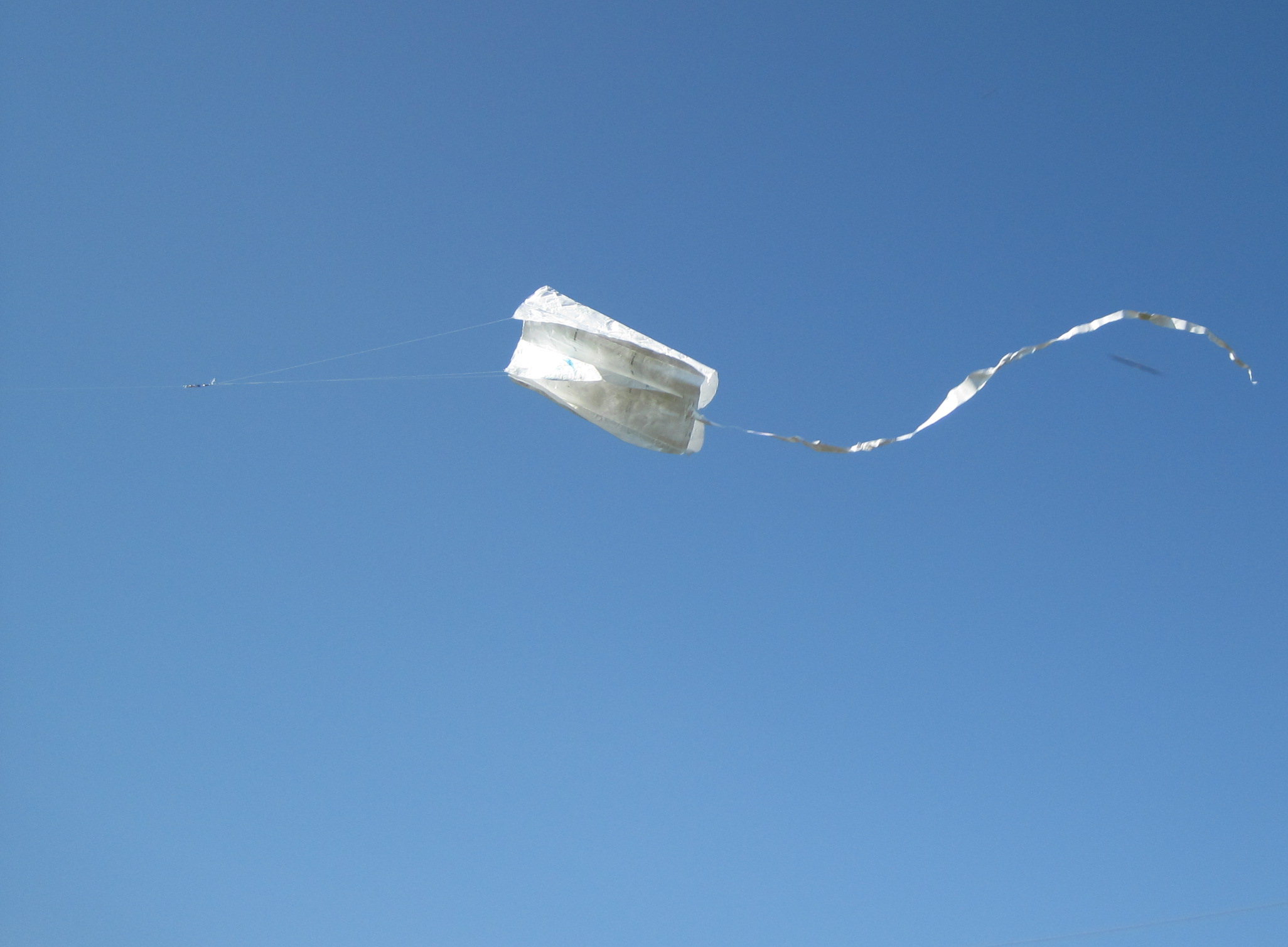
The picture to the right is of a kite that I built several weeks ago and only got around to actually flying this weekend. It’s basically made out of office supplies. :)
Originally I just wanted to make the Tyvek sled kite from the Howtoons shown in Craft Magazine, Volume 8. 1 But then I wanted to see how much of the kite I could assemble just using things from the office. The answer is, basically all of it.
The Howtoons calls for:
Instead I used:
Since the envelopes are significantly smaller than the sheet of Tyvek rolls, I had to either make my kite smaller or stitch them together into a larger sheet. I did both. I scaled the plans down to about 2/3rds the size from the diagrams and then used packing tape to put them all together. To get the most surface area out of each envelope, I burst all of the envelopes at the seams and then taped them up. Once I had a 36″ tall sheet, I started cutting it into the pieces I needed, re-taped it back together as indicated by the diagram, and then set it aside for weeks while I didn’t fly it. :)
On the day of the launch I made the tail out of strips of leftover envelopes taped together with the gluey bits from some of the envelope flap sealants and more packing tape. I punched a hole in the three ribs using a pen, ran the line through each of the three ribs, reinforced it with more packing tape… and launched.
The only non-office supply things used in the construction were:
It flew pretty well.
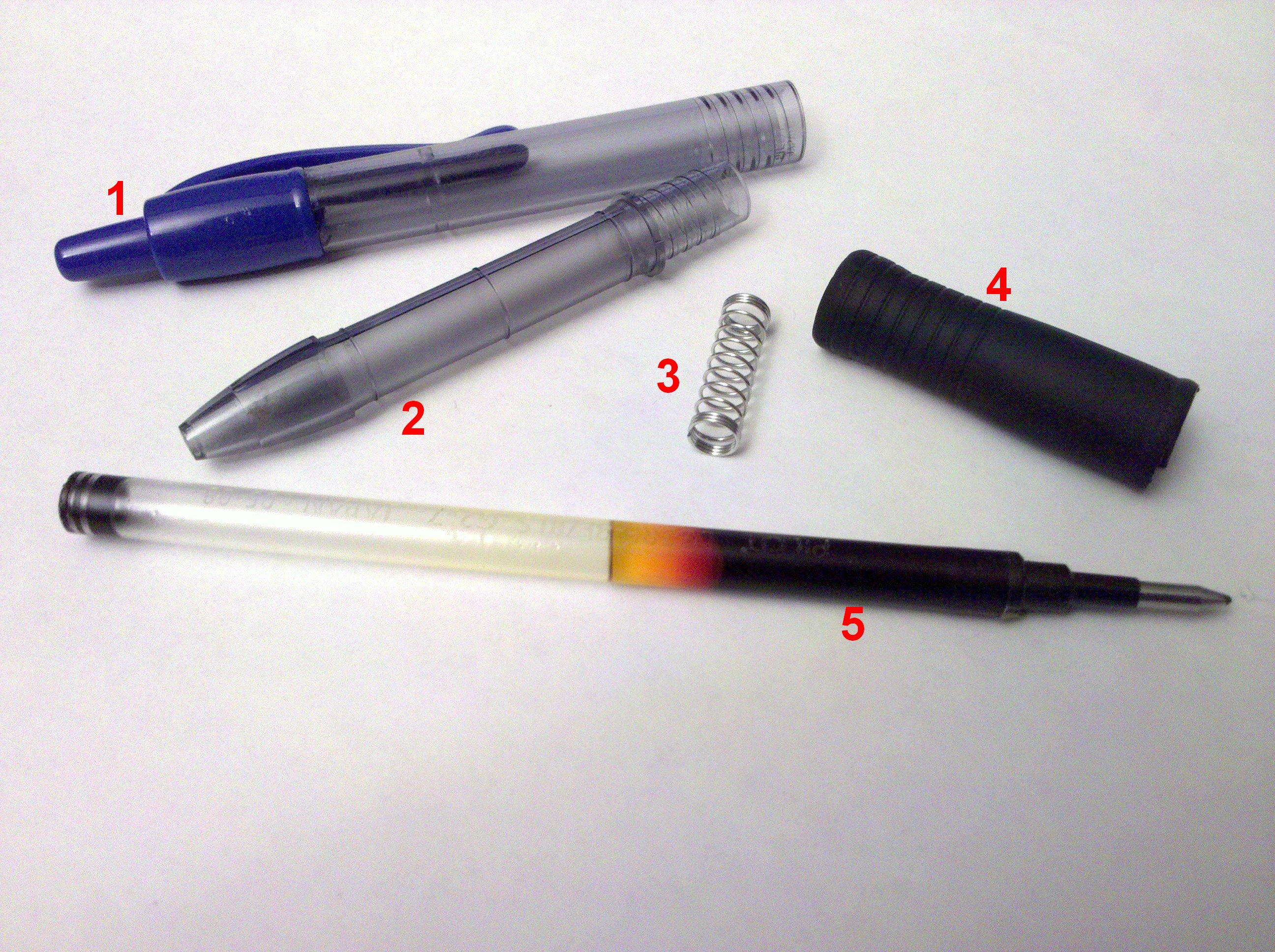
Pictured are:
Why am I telling you these things? Stay tuned…
Pete Hinzy left a comment asking:
I am also attempting to start up a small business with the focus on providing low cost, custom parts. I have one customer now but have struggled trying to “reach the masses”. Any thoughts?
Hi Pete!
Well, you asked for it!
Problem: Broken crayons, useless crayon bits, or crayon shavings. Crayola has their own crayon making system – a cross between an easy-bake-oven and little molds. However, I don’t think it is quite versatile enough. Plus, why pay $20 for what could be accomplished easily for $0.20 worth of plastic parts?
Solution: A printed crayon mold!
Description: Crayons melt at about 128 – 147 degrees Fahrenheit, or up to about 66 degrees Celsius. ABS won’t melt until around 88-125 degrees Celsius, so there’s a wide margin for melting the paraffin wax crayons without distorting the mold.1
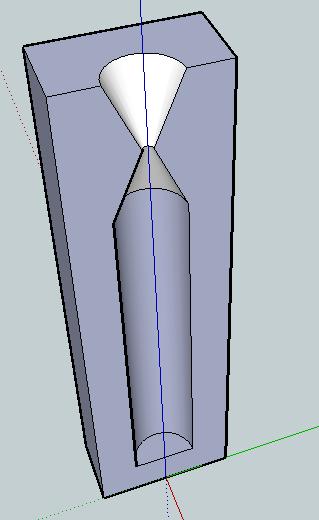
I would want at least three different molds – the normal crayon size, the fat crayon size, and then a triangular non-rolling crayon size. I’m picturing a two part mold for each, with the seam of the two parts running along the crayon lengthwise and a half funnel for pouring.
In addition to the half-mold, I’d also design a snug fitting square block for fitting the assembled mold into. That way you could stand it up and pour crayon wax into it.
Another potential use for this would be to place the pieces of crayon inside the mold, close it up, then heat. This would allow you to mend a broken crayon.
Usage: I can think of several different ways to use this mold. Frankly, I’m not sure which is easiest/most advisable/least advisable. There are easily several considerations:
I’m not sure which method of heating and cooling are optimal. Though I’d suspect it is preferable to apply the least amount of heat over the shortest period possible.
Variations: It would be interesting to create these molds in different shapes besides cylinders. You could top each one with a geometric shape, the head (or tail!) of some kind of animal or character, or something else entirely. You could mold crayons into spheres, blocks, chips, or little figurines. While not particularly sturdy, you could even mold them into building blocks or components of some larger device. A clever person could use some left over nichrome wire to build a heated metallic funnel.